
Bristol School and Council Support Sanctuary Seekers During Protests
Families residing in hotels supported throughout protests
Sanctuary seeking children and young people – along with their families – housed in a Bristol hotel which has attracted protests, were directly supported by Bristol City Council, volunteers and a local school.
The advanced planning meant that the impact of messaging which could have caused upset was minimised.
Bristol’s Mercure hotel in Redcliffe, has been the location of protest action by a Bristol group which is calling to ‘stop the boats’ as well as ‘protect the streets’ and ‘put British people first’.
Counter protestors were in attendance to stand in solidarity with those living in the hotel.
But the council said it had intervened in advance to protect residents. Council staff were on hand with entertainment and games as distraction – as well as a show of solidarity.
Education staff from one of city’s schools who knew the families and children, stayed at the hotel to support the children while the protest took place.
The council said that the school was “really welcomed”.
Volunteers from community organisations also joined in to support the wellbeing of residents.
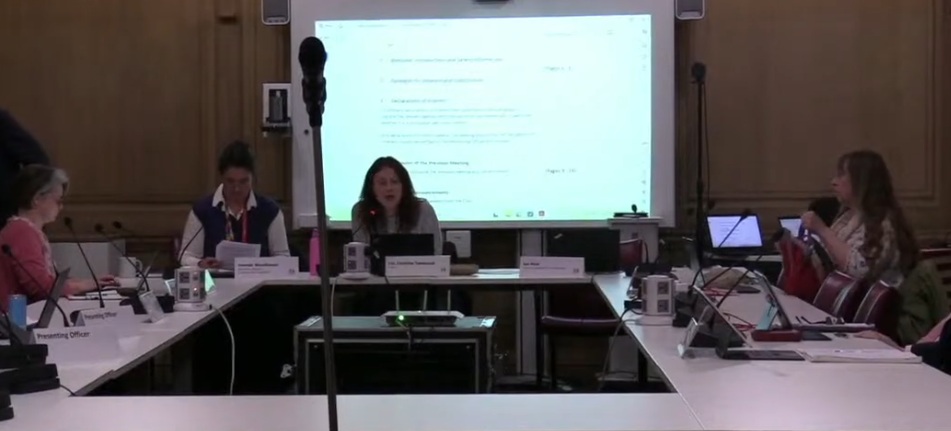
The subject was raised at Children and Young People Policy Committee last week.
As well as the work supporting the hotel residents, councillors expressed concern that there might not be enough support for them to learn English, which would help them belong to communities.
Green Councillor for Lawrence Hill Ward, Shona Jemphrey said: “I know we’ve got obviously an update on the sanctuary strategy later on, but I wondered whether you could give any more detail about what that support looks like for these children and young people who are already incredibly traumatised by sometimes by their journey here and then by the racism they’ve witnessed.
Head of Sanctuary Services at Bristol City Council, Helen Helen Brier said: “We do not house the asylum seekers and we don’t provide immediate support to the families. That’s all done through the home office contractors. Sue [Coombes] might also want to say a bit about what we do with children in the education space.
“In terms of the protest specifically, we had voluntary sector partners and members of my team in the hotel on the day of the protest. This protest and the others providing entertainment, games, distractions and just showing solidarity of the city with those people in the hotels. Obviously that was targeted at the children but providing that wider sense for everyone in those spaces.
“Then longer term we’ll speak about the sanctuary Strategy but there’s a lot within that which is about reaching out to support those families and children in the hotels.”
Head of Service for Belonging in Education, Susan Coombes said: “From an education perspective we’ve got two attendance and belonging officers who work with children’s and families who are situated in the hotels to support them in relation to understanding the education settings in Bristol and supporting them applying for places as well.
“So we’ve got that support mechanisms in place and we’re really working closely with those families.
“We’re also looking at starting a pilot piece of work working with our education settings on how best schools can support those children and families as well. So we’re starting that piece of work in the next few months.
“Schools are being really supportive in relation to the recent protest. One of our schools actually put staff into the hotels as well because they knew the children, young people and families and they were really welcomed in relation to supporting those children and families during that protest that took place.”
Councillor for Bishopsworth Ward Susan Kollar, asked about children that are “in hotels”. She said: “We’re talking about children, refugee children, children that have come in. I mentioned I think I mentioned this the other day in corporate parenting about the ESOL [English for Speakers of Other Languages] and how we are making sure because children that are going into education already have that issue around the traumas that they’ve gone through just to get here and then all of a sudden they’re faced with people who actually don’t speak their language.
“And the level of additional support in schools for children with Send and all the rest of it is not good enough.
“How how are we ensuring that children with the additional language barrier are being kind of supported in school? Is there is there a particular provision for ESOL? Or is that an expectation of the school to kind of manage it?”
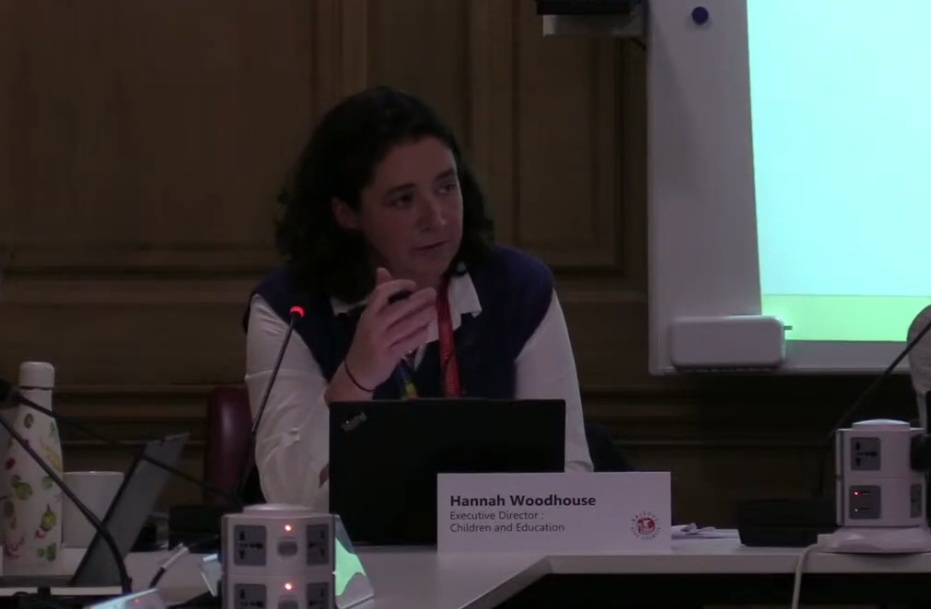
Executive Director of the Children and Education Directorate, Hannah Woodhouse Said:”It is for it is for the school. I mean we did have an ESOL team which was removed some some time ago and I think it is a big open conversation about whether we should be doing more. Obviously it’s skills funding and so we have been talking a bit with the combined authority [WECA] about whether there’s a opportunity there.
“I don’t know in whether it’s in the child poverty strategy or not, but whether there’s an opportunity there to put a bit of support behind ESOL, because as you say it’s a growing demand and it’s fairly universal what many schools will provide if they can obviously. But I’m sure we can do more.
Susan Coombes said “To add to that I mentioned earlier we’re setting up a partnership working with some of our keys that are taking in children from refugee and asylum seeking communities. You’re right, EAL is an issue in relation to those children arriving in those settings. So, we’re looking at work through the partnership in relation to supporting schools with EAL assessments, but also trauma informed approach as well to make sure those children are settled in those education settings.”

Conservative Councillor Stoke Bishop Ward, John Goulandris said: “I wasn’t intending to speak, but Sue’s fired me up on my hobby horse, which is the importance of being able to speak English. And I’m disappointed to hear that the ESOL team is no longer functioning because speaking as somebody who’s English isn’t my first language, is not the first language of my parents, but until we spoke English, we were knackered.
“That’s the reality in Britain. If you don’t speak English, you are absolutely disadvantaged completely and totally. So the one thing you have to do with any anybody who doesn’t speak English is teach them English. They’re not going to learn anything else. You’re wasting your time. So it, you know, teaching English to people is absolutely vital. It’s one of my little hobby horses. If you don’t do that and there are lots of there are provisions. I know people who volunteer to teach English.
“So, and “I can see another there’s another report which says, you know, that that we recognise the importance, but it’s under pressure, but it is a priority, absolute priority and I’m surprised that we’re not doing more in in that area.
Chair of the committee and Councillor for Southville Ward Christine Townsend said: “So, I remember when we did have the ESOL service probably about while I was still at City Academy, so we’re talking probably 15 20 years ago.
“As the sector has academised the funds that the local authority would have been in a position to be able to kind of top slice I suppose to provide those sorts of centralised services no longer is part of what comes into the authority. And that is part of why it’s become, you know, not just that many other things is like you are an academy and now you get the money and it’s up to the multi-academy trust and the governing bodies and the trustees to sort of use the funds they get in order to meet the needs of the children that are coming into their school in whatever way that looks like.
“One area that we as a local authority we still do support though is ensuring that within the the bits of the formula, the local formula within the school block DSG [Dedicated Schools Grant] that we maximise what is called the Additional Educational Needs Elements and one of those is ESOL. And that is in recognition of the additional kind of barrier that those particular groups of children have. So it’s a small lever, but it’s making sure that we’re able we use all of the ones that are available to us as a local authority to invest in to to ensure that we can invest in that sort of education that’s needed in those schools.
Susan Kollar asked a follow up question: “How do we ensure moving forward that there is a clear strategy to ensure that young children who come in as refugees and stuff are actually provided that kind of support with regards to that language barrier which is like said the severely disadvantaged in them?
“How do we as a committee kind of move forward?”
Christine Townsend: “We’re not in a position to make schools do it because we don’t largely don’t run them. Sue has said that there’s a project that’s kind of supporting schools. I would anticipate and I would expect that school improvement would look at ESOL within what’s going on in whatever school that is in the same way that they would look at how are your children in care doing, how are you Send children. I would expect that to be a line that would be looked at by those school improvement officers.
“But a lot of what the local authority was responsible for has now over time has been moved out into the academy sector. Some of the academies are kind of better able to form partnerships with each other and across their MAT than than than others. And it’s I think it’s still a developing area of practice about exactly what is the sector going to look like and how is it going to work now that we have local authority schools, voluntary aided and academies and free schools. And it changes year on year as well. Because local authority schools become academies on a sort of regular basis.
Hannah Woodhouse said: ” Well, I mean only to say that I was in a trust this this morning who serve a really diverse part of our city, one of the bigger trusts. And talking to MAT exactly that is how can they both open their doors more to the community which has been a request from the communities but also what sort of provision can we put on across the whole city. Because it’s you know it’s really important in terms of people not being isolated and particularly in the areas that need it most.
“So I think projects like the one that Sue is highlighting is where we can go. We can encourage, you know, with better relationships to the trust, we can encourage that much more and bring them together in that way. I hope.”
Green Councillor for Lawrence Hill Ward, Yassin Mohamud said: “Just to make clarification about the ESOL and the school attending, especially refugees or newcomers to the city. As a school government experience, what we doing is assessment the initial stage. If the student needs like a more support, the school doing like more support. And ESOL is more like adults who can get that learning.
“But if a student we know it whether it’s maintained or like academic, they should have to ask like the school early stage like assessment and they will get like support for that students.”
Further details around ESOL made up part of a later agenda item for the same meeting – Bristol Sanctuary Strategy and Action Plan, 2025 to 2030.
Home: https://chopsybaby.com/magazine/
TikTok: www.tiktok.com/@chopsybristolt
YouTube: https://www.youtube.com/user/chopsybaby