
What you really need …Your hospital bag for labour, birth and the baby
Nearing the end of pregnancy, it is a good idea to make sure you have your hospital bag packed and ready. Any time around 35 weeks is a good idea, as you may go into labour earlier than expected. We have put together a list of what you really need to take with you into hospital.
For you
Bag – essential
Don’t go for some dainty, pretty little case or bag. Have something substantial that you don’t mind kicking around dirty hospital floors and can be boil washed when you get home. A large sports bag is perfect.
Dressing Gown – optional
If you are a dressing gown person, this may be useful for you. Labour can progress slowly, or if your bedding gets taken for cleaning and not replaced you will need some way of keeping warm. The early stages of labour may see you trying to smash open a window to get some desperately needed air, but later stages, especially if you have had an epidural may require a warm layer you can wrap around yourself. A dressing gown may well be handy for dashing in and out of hospital shower rooms but it does take up huge space in your hospital bag. If you don’t usually wear one, then you probably won’t start now.
Slippers – optional
If you are a slipper person then again these may be useful for keeping active during labour. Remember, on a maternity ward, people will give birth unexpectedly everywhere so don’t trust the cleanliness of carpets. If you are the type of person who cannot be pried away from shabby trainers, or 15 hole Doctor Martins, then don’t waste cash or bag space on slippers now.
Pants – essential
You can never take too many pants into hospital. Take hundreds and take old ones. If you go into hospital to be induced you may find yourself there for days, or weeks depending on how they get the baby out. Induction can be messy and when the show finally pops out just bin the pants. After giving birth post-partum bleeding can be heavy. It’s better to take too many pants then to send a relative home to rifle through your underwear drawer trying to guess which ones are sensible. They will probably come back with all your old feeling lucky clubbing pants.
If you have a planned C-Section then you may like to get hold of specially designed pants that stretch over the scar sold by the National Child Birth Trust. If you don’t want to splash this cash then a pack of ten granny pants from Ethel Austin is just as good.
Avoid the trashy magazines. You will always find at least one horror ‘I died in childbirth and was resuscitated by my pet pooch’ story
Clothes – essential
You just don’t know how long you will be in hospital for so make sure you have some comfortable clothes. If in doubt, pack a second bag of items to leave at home for a relative to fetch if you run short of any items. After giving birth, it takes sometime for your uterus to shrink back and don’t forget any added baby weight. Don’t try to take pre-pregnancy clothes. Think comfort in case you end up having emergency surgery. As well as pants take nursing bra, socks and nightwear.
Decide what you want to wear in labour. Giving birth can be messy and with plenty of pipes and tubes coming out of here there and everywhere, clothes may need to be removed quickly. Remember that a baby comes out of the bottom half which is likely to be on display much of the time. A long top or nightdress will offer you a touch of privacy and keep any non-partner birth partners at your head end.
Toiletries – essential
Toiletries are essential. If you have liberated some small bottles from holiday stays these are perfect for keeping your bag small. Don’t forget: toothbrush and paste, razor, deodorant, wet wipes, shower gel and shampoo. Remember that bottom ends will be sore if you have a tear so try to take natural products with no chemicals to sting you. Don’t forget your hairbrush and hair bands. A anti-bacterial hand wash can keep your hands germ free. For germy surfaces, take a bottle of Matron hand and surface wash as featured in our health and wellbeing section. It kills MRSA.
Entertainment – helpful
If you are being induced there is no telling how long your hospital stay may take. Natural labour may also take hour or even days. Don’t go to hospital until you really need to as they will only send you home again if you are not at least 3cm dilated.
You have to pay to view the television. If you don’t want to do this avoid the trashy magazines. You will always find at least one horror ‘I died in childbirth and was resuscitated by my pet pooch’ story.
Take your mobile phone charger so you don’t kill the battery on the internet. Books, portable DVD players, Ipods are great for entertainment but remember that despite hospital security, even criminals give birth so don’t leave these things lying around.
If you take nothing you will never forget the exact positioning of the asbestos warning labels throughout the hospital room, the loose threads in the curtains, or feeling annoyed at the merry sound of happy people in the pub next door.
Camera – nice
Disposable ones are best. Don’t get pure black and white ones. Get a good colour camera with a flash then scan developed pictures into the computer and be arty when you can hit the undo button.
Hospital policies vary. Some don’t allow cameras into the delivery room. Check with mum before you start snapping. Being trussed up on an operating table with the uterus cut open may not be a Kodak moment they wish the paparazzi to capture.
It’s better to take too many pants then to send a relative home to rifle through your underwear drawer
Breast pads – essential
Milk comes in at different rates for different mums, but avoid any embarrassment by popping a few in your bra. One box will do in the bag.
Maternity pads – Very essential
You will need at least two packs of these. Bleeding rates vary from person to person. Some people may find they need two pads at a time, other people barely need one. It’s something you just don’t want to run out of. Bare minimum 20. Get maternity pads rather than sanitary towels. Maternity pads are designed for the heavy flow of post birth blood, not playing volleyball in a skimpy white outfit for a television commercial.
For the baby
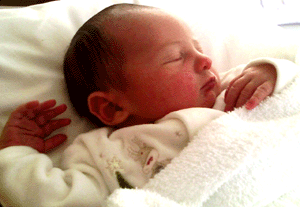
An infant car set – essential
Some hospitals won’t let you leave by car without one. Don’t think of trying to drive your baby home whilst it is sat on your lap. It is stupid, selfish and dangerous. Keep a baby blanket in the car seat for coming home, but try not to take it in the hospital with you especially if it is a cellular one. You will most likely never see it again.
Vests and sleep suits – essential
A pack of seven supermarket cotton vests and seven cotton sleep suits will lie flat at the bottom of your bag. Your baby may go through these quite quickly until you fit nappies correctly and learn where the baby wees.
Note for new mums with boys. Make sure you angle the boy bits facing down otherwise they will wee out of their armpits.
If you have a C-Section you will probably be in hospital at least three days afterwards. If your baby does not regain their birth weight during this time, the hospital will also keep the baby in longer. It’s better to bring in more clothes for the baby then to buy them in the hospital shop.
Many mums-to-be will insist on washing these clothes as soon as they have purchased them to make sure they are clean and chemical free for the new baby’s skin. This seems a little unnecessary if you are just going to wash them up in your normal washing powder.
No – some fool really did leave you in charge of a baby
Coat or snow suit – Important
Snow suits are ideal in the winter seasons but take care not to leave it on the infant other than on the journey home as babies over heat easily. Lightweight coats are good for warmer months.
Hat – Important
This will be needed once the baby is born, during the hospital stay and until the baby goes home. After this centrally heated houses mean that they won’t need a hat, and never let a baby go to sleep in the cot wearing one.
Scratch Mits – useful
Babies can come out with very long nails and scratches all over their faces. Popping on a scratch mit may help until you get their nails cut, but equally they may upset the baby. Babies can also suck them off their hands. If you have a hungry baby who keeps gesturing by putting their hands to their mouth, they can be useful for stopping the baby developing sore facial skin. They can be purchased very cheaply and take up no room so there is no harm in buying a pair.
Nappies – essential
There will be a dawning realisation after your baby is born that you are entirely responsible for nappy changing. Despite the overwhelming urge to press the button for the midwife – no – some fool really did leave you in charge of a baby including scraping off the tar like first poo which welds itself to their bum. The first sticky poo will come off with Vaseline, which may be a handy addition to your bag. You will want newborn sized nappies and at least one full pack of them.